In this articleShowHide
Education has always been one of the strongest drivers of social and economic development. But as the world of work changes, education itself is changing. Academic knowledge remains important, but learners increasingly need digital literacy, practical skills, communication, problem-solving capabilities and an understanding of emerging technologies. The future of education is therefore moving towards a more integrated approach — one where knowledge, skills and technology work together.
From Academic Learning to Real-World Skills
Traditional education often focuses heavily on theoretical knowledge. A strong academic foundation remains important, but learners also need opportunities to understand how their knowledge can be applied in real-world situations. Skill-based learning helps bridge this gap.
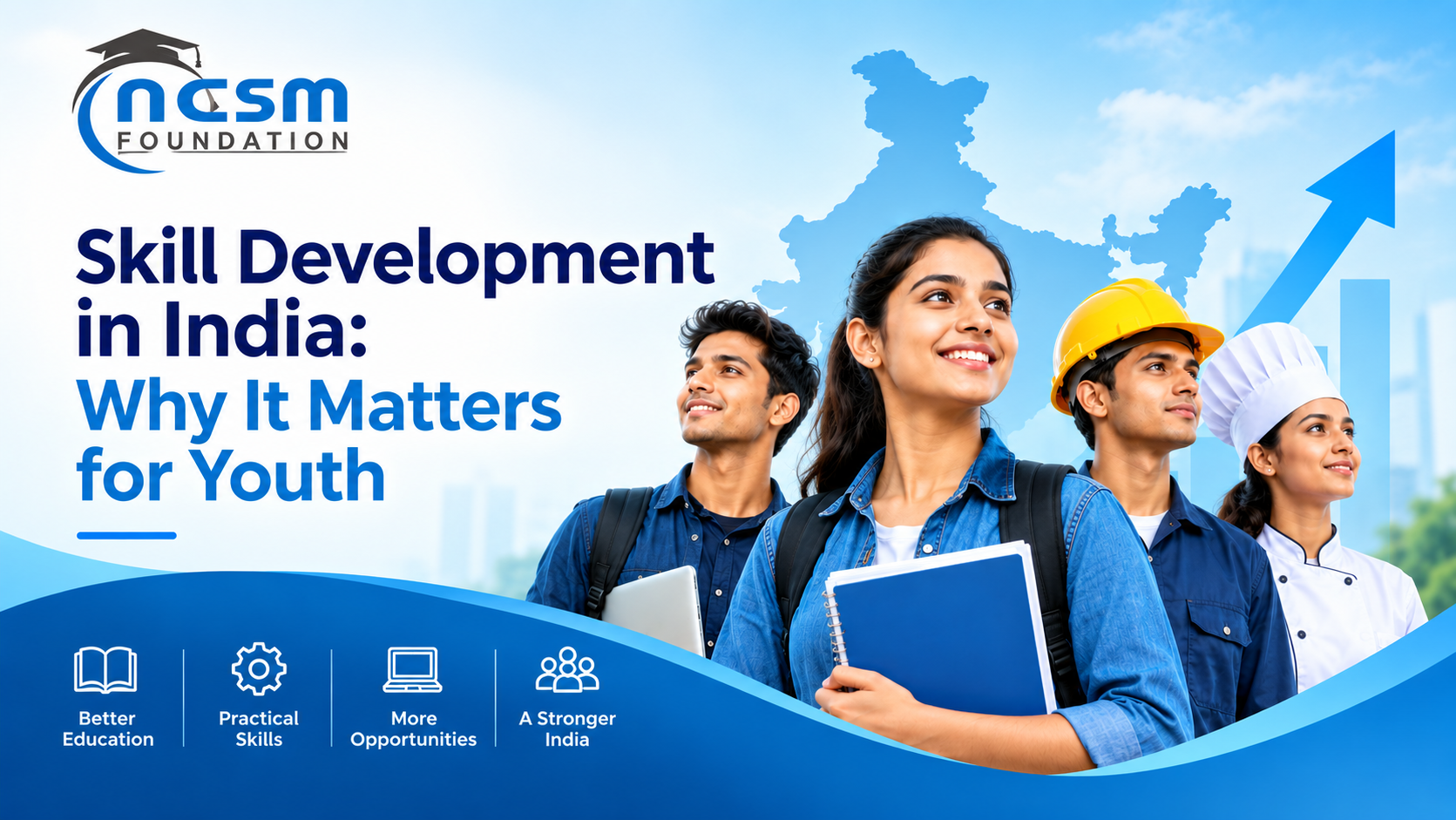
Vocational education, computer education, technical training, entrepreneurship programmes and industry-oriented courses can help learners develop practical capabilities alongside academic qualifications. Through skill development programmes, learners can gain practical knowledge and capabilities that complement their academic education and prepare them for changing career requirements.
Organisations such as NCSM Foundation work across education, skills and technology to create learning opportunities that connect knowledge with practical application.
Technology Is Changing the Way We Learn
Online classes, digital learning resources, virtual classrooms and technology-enabled assessments have expanded access to education. Digital tools can allow learners to access educational resources beyond the limitations of traditional classrooms.
Artificial Intelligence is taking this transformation further through tools that can support learning, research, productivity and personalised educational experiences. As AI becomes increasingly relevant across industries, understanding emerging technologies is becoming an important part of future-ready education.
Learners interested in emerging technologies can explore AI and Machine Learning training as part of their professional development. NCSM Foundation offers AI and Machine Learning learning pathways for students, teachers, professionals and entrepreneurs.
Technology, however, should complement teachers and meaningful human interaction rather than replace them. Effective learning environments can combine technology with experienced educators, practical activities and continuous guidance.
For learners who require flexible access to education, online courses can provide another pathway to developing new technical and professional skills. NCSM Foundation's online learning offerings include AI courses and foreign language programmes delivered through live online classes.
The Importance of Future-Ready Skills
The skills required by industries continue to evolve. Digital literacy, programming, data-related skills, artificial intelligence, communication, financial awareness and entrepreneurship are increasingly relevant across sectors.
This makes continuous learning important for students and working professionals alike.
Future-ready education is not limited to one particular subject. A learner may need technical knowledge, digital skills, communication abilities and problem-solving capabilities depending on their chosen career path.
This is why vocational courses and career-oriented training can complement conventional academic education. Practical learning can help students understand workplace requirements while developing skills that can be applied beyond the classroom. NCSM Foundation's vocational programmes include areas such as beauty and wellness, tailoring, electrical work, appliance repair, computer hardware, networking, CCTV installation and solar PV installation.
Education Must Become More Inclusive
Quality educational opportunities should not be restricted by geography or socioeconomic background. Government programmes, CSR initiatives, educational institutions and training organisations can help expand access to learning opportunities in urban, rural and underserved communities.
Technology can also support this objective by making educational resources more accessible. Online learning, digital platforms and technology-enabled training can reduce some geographical barriers and allow learners to access educational opportunities from different locations.
NCSM Foundation's work includes government-sponsored education and skill development initiatives, with programmes designed to extend learning and training opportunities across different communities and regions. Its government and institutional partnerships include collaborations involving government departments, PSUs, sector skill councils and institutional partners.
However, accessibility is not only about providing digital resources. Effective education also requires appropriate guidance, qualified educators, practical training and support systems that help learners complete their learning journey.
Building a More Capable Workforce
India's demographic strength can become a major advantage when young people have access to the right education and skills.
The objective is not simply to produce more degree holders, but to develop learners who can think critically, adapt to new technologies, communicate effectively and apply knowledge in practical environments.
This requires stronger connections between education, skill development and employability. Training programmes that combine theoretical understanding with practical exposure can help learners become better prepared for changing workplace expectations.
Employers also have an important role in connecting education with employment. Through NCSM Foundation's employer partnership programme, organisations can connect with candidates trained through vocational, ITI, computer education and skill development programmes.
Collaboration between educational organisations, institutions, government programmes and employers can therefore strengthen the connection between learning and real-world career opportunities.
The Future of Education Is Integrated
The future of education will depend on bringing together three essential elements:
Education for knowledge.
Skills for application.
Technology for opportunity.
Academic learning will continue to provide the foundation, while practical skills will help learners apply their knowledge. Technology can then expand access to information, introduce new learning possibilities and prepare students for an increasingly digital economy.
The future of education is therefore not about choosing between academic learning, vocational training or technology. It is about creating an integrated learning ecosystem where all three contribute to a learner's growth.
For students, professionals and communities, this approach can create opportunities to learn continuously, develop relevant skills and adapt to a rapidly changing world.
NCSM Foundation works across education, digital literacy, skill development, vocational training and emerging technologies, supporting the broader objective of creating accessible and future-oriented learning opportunities.
Written by
NCSM Foundation
NCSM Foundation has supported learners across India with quality education, competitive exam coaching and skill development since 2012.